CLICK ON THE LABELS FOR MORE INFORMATION - CONTACT US AT quest47c4isr@gmail.com today
Showing posts with label US. Show all posts

December 22, 2010

Pakistani Deception - Project A/B


Pakistan Nuclear Weapons - A Chronology


1965: Pakistani nuclear research reactor at Parr, Rawalpindi, starts functioning.

1968: Nonproliferation Treaty completed. Pakistan refuse to sign.


1974: India tests a device of up to 15 kilotons and calls the test a ``peaceful nuclear explosion.'' Pakistani Prime minister Zulfikar Ali Bhutto tells meeting of Pakistan's top scientists of intention to develop nuclear arms.

1974 -- Pakistan proposed to India the establishment of a nuclear weapons free zone in south Asia

1978 -- Pakistan proposed to India a joint Indo-Pakistan declaration renouncing the acquisition and manufacture of nuclear weapons
K.S.Menon
FAS, WMD

1979 -- The United States cut off aid to Pakistan under section 669 of the Foreign Assistance Act of 1961 FAA) after it was learned that Pakistan had secretly begun construction of a uranium enrichment facility.

1979 -- Pakistan proposed to India mutual inspections by India and Pakistan of nuclear facilities

1979 -- Pakistan proposed to India simultaneous adherence to the NPT by India and Pakistan

1979 -- Pakistan proposed to India simultaneous acceptance of full-scope IAEA safeguards

1980s
Early 1980's--Multiple reports that Pakistan obtained a pre-tested, atomic bomb design from China.

Early 1980's--Multiple reports that Pakistan obtained bomb-grade enriched uranium from China.

1980

1980--U.S. Nuclear Export Control Violation: Reexport via Canada (components of inverters used in gas centrifuge enrichment activities).

1981--U.S. Nuclear Export Control Violation: New York, zirconium (nuclear fuel cladding material).
1981--AP story cites contents of reported US State Department cable stating `We have strong reason to believe that Pakistan is seeking to develop a nuclear explosives capability * * * Pakistan is conducting a program for the design and development of a triggering package for nuclear explosive devices.'

1981--Publication of book, Islamic Bomb, citing recent Pakistani efforts to construct a nuclear test site.

1982/3--Several European press reports indicate that Pakistan was using Middle Eastern intermediaries to acquire bomb parts (13-inch `steel spheres' and `steel petal shapes').

1983--Declassified US government assessment concludes that `There is unambiguous evidence that Pakistan is actively pursuing a nuclear weapons development program * * * We believe the ultimate application of the enriched uranium produced at Kahuta, which is unsafeguarded, is clearly nuclear weapons.'

1984--President Zia states that Pakistan has acquired a `very modest' uranium enrichment capability for `nothing but peaceful purposes.'

1984--President Reagan reportedly warns Pakistan of `grave consequences' if it enriches uranium above 5%.

1985--ABC News reports that US believes Pakistan has `successfully tested' a `firing mechanism' of an atomic bomb by means of a non-nuclear explosion, and that US krytrons `have been acquired' by Pakistan.

1985--U.S. Nuclear Export Control Violation: Texas, krytrons (nuclear weapon triggers).
1985--U.S. Nuclear Export Control Violation: US cancelled license for export of flash x-ray camera to Pakistan (nuclear weapon diagnostic uses) because of proliferation concerns.

1985/6--Media cites production of highly enriched, bomb-grade uranium in violation of a commitment to the US.
1985 -- Pressler Amendment [section 620E(e) of the Foreign Assistance Act] requires a total cut-off of U.S. aid to Islamabad unless the president can certify that Pakistan does not possess a nuclear weapon, and that continued US aid will significantly decrease the probability of its developing one in the future.

1986--Bob Woodward article in Washington Post cites alleged DIA report saying Pakistan `detonated a high explosive test device between Sept. 18 and Sept. 21 as part of its continuing efforts to build an implosion-type nuclear weapon;' says Pakistan has produced uranium enriched to a 93.5% level.

1986--Press reports cite U.S. `Special National Intelligence Estimate' concluding that Pakistan had produced weapons-grade material.
1986--Commenting on Pakistan's nuclear capability, General Zia tells interviewer, `It is our right to obtain the technology. And when we acquire this technology, the Islamic world will possess it with us.'

1986--Declassified memo to then-Secretary of State Henry Kissinger states, `Despite strong U.S. concern, Pakistan continues to pursue a nuclear explosive capability * * * If operated at its nominal capacity, the Kahuta uranium enrichment plant could produce enough weapons-grade material to build several nuclear devices per year.'


1987 -- Pakistan proposed to India an agreement on a bilateral or regional nuclear test ban treaty

1987--U.S. Nuclear Export Control Violation: Pennsylvania, maraging steel & beryllium (used in centrifuge manufacture and bomb components).

1987--London Financial Times reports US spy satellites have observed construction of second uranium enrichment plant in Pakistan.

1987--Pakistan's leading nuclear scientist Abdul Qadeer Khan states in published interview that `what the CIA has been saying about our possessing the bomb is correct.'
1987--West German official confirms that nuclear equipment recently seized on way to Pakistan was suitable for `at least 93% enrichment' of uranium; blueprints of uranium enrichment plant also seized in Switzerland.

1987--U.S. Nuclear Export Control Violation: California, oscilloscopes, computer equipment (useful in nuclear weapon R&D).

1987--According to photocopy of a reported German foreign ministry memo published in Paris in 1990, UK government official tells German counterpart on European nonproliferation working group that he was `convinced that Pakistan had `a few small' nuclear weapons.'

1987 -- China concluded a deal with Pakistan to sell M-11 missiles and launchers.
1988--President Reagan waives an aid cutoff for Pakistan due to an export control violation; in his formal certification, he confirmed that `material, equipment, or technology covered by that provision was to be used by Pakistan in the manufacture of a nuclear explosive device.'

1988--Hedrick Smith article in New York Times reports US government sources believe Pakistan has produced enough highly enriched uranium for 4-6 bombs.

1988--President Zia tells Carnegie Endowment delegation in interview that Pakistan has attained a nuclear capability `that is good enough to create an impression of deterrence.'

1989--Multiple reports of Pakistan modifying US-supplied F-16 aircraft for nuclear delivery purposes; wind tunnel tests cited in document reportedly from West German intelligence service.

1989--Test launch of Hatf-2 missile: Payload (500 kilograms) and range (300 kilometers) meets `nuclear-capable' standard under Missile Technology Control Regime.
1989--CIA Director Webster tells Senate Governmental Affairs Committee hearing that `Clearly Pakistan is engaged in developing a nuclear capability.'
1989--Media claims that Pakistan acquired tritium gas and tritium facility from West Germany in mid-1980's.

1989--ACDA unclassified report cites Chinese assistance to missile program in Pakistan.

1989--UK press cites nuclear cooperation between Pakistan and Iraq.
1989--Article in Nuclear Fuel states that the United States has issued `about 100 specific communiques to the West German Government related to planned exports to the Pakistan Atomic Energy Commission and its affiliated organizations;' exports reportedly included tritium and a tritium recovery facility.

1989--Article in Defense & Foreign Affairs Weekly states `sources close to the Pakistani nuclear program have revealed that Pakistani scientists have now perfected detonation mechanisms for a nuclear device.'
1989--Reporting on a recent customs investigation, West German magazine Stern reports, `since the beginning of the eighties over 70 [West German] enterprises have supplied sensitive goods to enterprises which for years have been buying equipment for Pakistan's ambitious nuclear weapons program.'
1989--Gerard Smith, former US diplomat and senior arms control authority, claims US has turned a `blind eye' to proliferation developments Pakistan in and Israel.

1989--Senator Glenn delivers two lengthy statements addressing Pakistan's violations of its uranium enrichment commitment to the United States and the lack of progress on nonproliferation issues from Prime Minister Bhutto's democratically elected government after a year in office; Glenn concluded, `There simply must be a cost to non-compliance--when a solemn nuclear pledge is violated, the solution surely does not lie in voiding the pledge.'
1990

1989-1990--reports of secret construction of unsafeguard nuclear research reactor; components from Europe.

Spring 1990 -- Pakistan reportedly reacted to Indian Army war game maneuvers near its border by preparing to drop one of seven weapons from a specially configured C-130 cargo plane. [02 December 1992 NBC News report]
1990--US News cites `western intelligence sources' claiming Pakistan recently `cold-tested' a nuclear device and is now building a plutonium production reactor; article says Pakistan is engaged in nuclear cooperation with Iran.

1990--French magazine publishes photo of West German government document citing claim by UK official that British government believes Pakistan already possesses `a few small' nuclear weapons; cites Ambassador Richard Kennedy claim to UK diplomat that Pakistan has broken its pledge to the US not to enrich uranium over 5%.

1990--London Sunday Times cites growing U.S. and Soviet concerns about Pakistani nuclear program; paper claims F-16 aircraft are being modified for nuclear delivery purposes; claims US spy satellites have observed `heavily armed convoys' leaving Pakistan uranium enrichment complex at Kahuta and heading for military airfields.

1990--Pakistani biography of top nuclear scientist (Dr. Abdul Qadeer Khan and the Islamic Bomb), claims US showed `model' of Pakistani bomb to visiting Pakistani diplomat as part of unsuccessful nonproliferation effort.

1990--Defense & Foreign Affairs Weekly reports `US officials now believe that Pakistan has quite sufficient computing power in country to run all the modeling necessary to adequately verify the viability of the country's nuclear weapons technology.'

1990--Dr. A.Q. Khan, father of Pakistan's bomb, receives `Man of the Nation Award.'
1990--Washington Post documents 3 recent efforts by Pakistan to acquire special arc-melting furnaces with nuclear and missile applications.

October 1990 -- President Bush announced that he could no longer provide Congress with Pressler Amendment certification that Pakistan does not possess a nuclear weapon. Economic and military aid was duly terminated, though the Bush administration continued to permit a limited number of commercial military sales to Pakistan. Pakistan handled the cutoff with little public rancor and committed itself to freezing the nuclear program in an attempt to placate the United States.

1991 -- Pakistan proposed to India commencement of a multilateral conference on the nuclear proliferation in south Asia

1991--Wall Street Journal says Pakistan is buying nuclear-capable M-11 missile from China.

1991--Sen. Moynihan says in television interview, `Last July [1990] the Pakistanis machined 6 nuclear Pakistan warheads. And they've still got them.'
1991--Time quotes businessman, `BCCI is functioning as the owners' representative for Pakistan's nuclear-bomb project.'
1991--India and Pakistan enter agreement prohibiting attacks on each other's nuclear installations.

July 1991 - Reliable reports from Islamabad confirm that Pakistan had frozen production of HEU and halted the manufacturing of nuclear weapons components.

1992--Pakistani foreign secretary publicly discusses Pakistan's possession of `cores' of nuclear devices.

Late 1992 -- The US Government determines that China had transferred items controlled under the international Missile Technology Control Regime to Pakistan.
December 1992 -- The US Government asked Pakistan to return eight US Navy frigates and a supply ship that had been leased to the Pakistan Navy, which accounted for more than half of Pakistan's major surface combatants.

01 December 1992 -- Senator Larry Pressler reportedly stated in a press interview that he had been told by the Central Intelligence Agency (CIA) that Pakistan had assembled seven weapons and could air drop one in a matter of hours [Dec. 1, 1992 NBC News broadcast].

1993 -- Pakistan proposed to India creation of a missile-free zone in south Asia
25 August 1993 -- The United States imposed "Category Two" sanctions against certain Chinese and Pakistani entities that were involved in an M-11 missile-related transfer, which is prohibited under US law.
Late 1993 -- The Clinton Administration, citing what it considered to be asymmetrical treatment accorded to Pakistan and India over their respective nuclear programs, proposed revising the Pressler Amendment and certain "country-specific" sections of the Foreign Assistance Act. The administration argued that by the time nuclear nonproliferation provisions had been added to the Foreign Assistance Act, India had already acquired the capability to build nuclear weapons and thus Pakistan had borne the brunt of most United States sanctions.


Early 1994 -- The Clinton Administration withdrew its proposal to revise the amendment because of strong criticism from a number of influential members of Congress, including Senator Pressler himself.

April 1994 - Deputy Secretary of State Strobe Talbott visits Islamabad to propose a one-time sale of F-16 fighter aircraft to Pakistan. Delivery of the planes would be contingent on specific commitments from Pakistan regarding its nuclear program, including a verifiable cap on the production of fissile materials. Talbott states that there is "broad agreement" between the United States and Pakistan on the goal of "first capping, then reducing, and eventually eliminating weapons of mass destruction and ballistic missiles from South Asia."

April 1995 -- Prime Minister Bhutto visits Washington.

September 1995 -- The Clinton Administration proposes revisions to the Pressler Amendment, citing the Amendment's roadblocks to cooperation with Pakistan's Government in areas such as combatting terrorism and furthering US commercial interests in Pakistan. Under the Brown Amendment, the US would not deliver the controversial F-16 aircraft or resume an official military supply relationship with Pakistan, but the President decided to sell the F-16 aircraft to other countries and return the proceeds to Pakistan.

1996

01 January 1996 -- India and Pakistan exchange lists of atomic installations which each side has pledged not to attack under an over seven-year-old confidence-building agreement.

January 1996 -- The Brown amendment was signed into law to relieve some of the pressures created by the Pressler sanctions, which had crippled parts of the Pakistani military, particularly the Air Force. The Brown amendment allowed nearly $370 million of previously embargoed arms and spare parts to be delivered to Pakistan. It also permited limited military assistance for the purposes of counter-terrorism, peacekeeping, anti-narcotics efforts, and some military training.

March 1996 -- Pakistan commissioned an unsafeguarded nuclear reactor, expected to become fully operational in the late 1990s, that will provide it with a capability to produce weapons-grade plutonium.

Late 1996 -- Pakistan's main nuclear weapons laboratory, the A.Q. Khan Laboratory in Kahuta, purchased 5,000 ring magnets from China. The ring magnets would allow Pakistan to effectively double its capacity to enrich uranium for nuclear weapons production.

03 October 1996 -- Pakistani Prime Minister Benazir Bhutto called for the convening of a South Asia security conference that would deal with, among other things, Kashmir and the nuclear arms issue.


04 July 1997 -- Pakistan confirms test-firing of new indigenous Hatf missile.


06 September 1997 -- Pakistani Prime Minister Nawaz Sharif claims Pakistan possesses nuclear weapons, saying that: "Pakistan's nuclear capability is now an established fact. Whatever we have, we have a right to keep it...."


1998
28 May 1998: Pakistan detonates five nuclear devices. Pakistan claimed that the five nuclear tests measured up to 5.0 on the Richter scale, with a reported yield of up to 40 KT (equivalent TNT).


30 May 1998 Pakistan tested one more nuclear warheads, with a yield of 12 kilotons, bringing the total number of claimed tests to six.


04 July 1997 -- Pakistan confirms test-firing of new indigenous Hatf missile.

06 September 1997 -- Pakistani Prime Minister Nawaz Sharif claims Pakistan possesses nuclear weapons, saying that: "Pakistan's nuclear capability is now an established fact. Whatever we have, we have a right to keep it...."


28 May 1998: Pakistan detonates five nuclear devices. Pakistan claimed that the five nuclear tests measured up to 5.0 on the Richter scale, with a reported yield of up to 40 KT (equivalent TNT).

30 May 1998 Pakistan tested one more nuclear warheads, with a yield of 12 kilotons, bringing the total number of claimed tests to six.

June 24, 2010

Littoral Combat Ship

Littoral Combat Ship (LCS) High-Speed Surface Ship

Key Data

Hull Service Life
30 years
Draft at Full Load Displacement
10ft
Sprint Speed in Sea State 3
50kt
Range at Sprint Speed with Full Payload
1,500nm
Range at Economical Speed
4,300nm
Economical Speed
>20kt
Crew Size
15 to 50 core crew
Accommodation for Core and Mission Crew
75
Operational Availability
95%

Aviation Facilities:

Embark and Hangar
1 x MH-60R/S and VTUAVs
Flight Deck
MH60R/S, UAVs, NTUAVs
Aircraft Launch and Recovery
Up to Sea State 5
Watercraft Launch and Recovery
Sea State 4, in 15 minutes
Watercraft Mission Packages
11m RHIB, 40ft high-speed boats
Time for Change of Mission Packages
One day
Ship and Crew Provisions
21 days (336 hours)
Underway Replenishment
180t including 105t mission packages and 75t mission package fuel


The littoral combat ship (LCS) is the first of a new family of surface ships for the US Navy. The LCS is a fast, highly manoeuverable, networked surface combat ship, which is a specialised variant of the family of US future surface combat ships known as DD(X). LCS is designed to satisfy the urgent requirement for shallow draft vessels to operate in the littoral (coastal waters) to counter growing potential 'asymmetric' threats of coastal mines, quiet diesel submarines and the potential to carry explosives and terrorists on small, fast, armed boats.
In May 2004, the United States Department of Defense and the US Navy announced the selection of two separate defense contracting teams led by Lockheed Martin and General Dynamics to each carry out system design and options for the detailed design and construction of two flight 0, or first-generation, LCS ships.

Lockheed Martin received a contract for the first ship, LCS 1, in December 2004. The keel for LCS 1, to be called USS Freedom, was laid in June 2005 at the Marinette Marine shipyard in Wisconsin. It was launched in September 2006.
General Dynamics was awarded the contract for USS Independence, LCS 2, in October 2005. The keel was laid in January 2006 at the Austal USA shipyard in Mobile, Alabama. It was launched in April 2008 and christened in October 2008. The ship completed the builder's sea trials in October

2009 and was delivered to the USN in December 2009. It was commissioned in January 2010. Lockheed Martin was also to build LCS 3, USS Courage, to commission in 2009. The contract was awarded in June 2006 and the vessel was to begin construction in early 2007. However, in January 2007, the USN ordered Lockheed Martin to stop work on LCS 3. The USN wished to review the program because of concerns over cost increases incurred in the construction of USS Freedom. In April 2007, the USN terminated the contract for LCS 3. General Dynamics was also awarded the contract to build LCS 4, USS Liberty in December 2006. In October 2007, the US Navy also terminated the contract for this vessel.
In April 2008, the US Navy issued a request for proposals to the two companies for three LCS ships. It had previously been planned that orders would be placed for nine flight 1 (second-generation) LCS ships during 2008 and 2009, for ship commissioning during the period 2010 to 2012. The contract for the Coronado, LCS 4, was awarded to General Dynamics in April 2009. The keel was laid in December 2009. It is scheduled for delivery in June 2012. The numbers of LCS ships is not finalised but there has been speculation of 56 or up to 60 LCS ships, within a total US naval fleet of 375 ships.
The contract option awarded to Lockheed Martin is managed by Lockheed Martin's maritime systems and sensorsdivision in Moorestown, New Jersey. The Lockheed Martin team includes: Marinette Marine shipyard, Bollinger Shipyards, Gibbs and Cox naval architects, Izar of Spain and Blohm & Voss naval shipbuilders. The contract option awarded to General Dynamics is managed by Bath Iron Works at Bath, Maine.
The major members of General Dynamics team are: Austal USA, based in Mobile, Alabama (a subsidiary of Austal Ships of Australia); BAE Systems, Rockville, Maryland; Maritime Applied Physics Corporation, Baltimore, Maryland; CAE Marine Systems, Leesburg, Virginia; Northrop Grumman Electronic Systems, Baltimore, Maryland; General Dynamics Armament and Technical Products, Burlington, Vermont; General Dynamics Electric Boat, Gorton, Connecticut; General Dynamics Advanced Information Systems, Washington, DC; and General Dynamics Canada, Ottawa, Ontario.
In April 2005, the US Navy awarded a foreign military sales contract to Lockheed Martin to conduct a nine-month feasibility study to examine possible modifications to the Lockheed Martin LCS design to meet the requirements of the Israeli Navy. The study concentrated on hull, mechanical and electrical system compatibility. The Israeli Navy requirement includes the mk41 vertical-launch system for Barak missiles. The contract was extended in November 2007 to include technical specification and costs for the combat system. In July 2008, Israel requested the foreign military sale (FMS) of up to four vessels of the LCS 1 variant.

Littoral combat ship design

The two designs are quite different, although both satisfy the top-level pe

rformance requirements and technical requirements of the LCS programme. Both achieve sprint speeds of over 40kt and long-range transit distances of over 3,500 miles. The Lockheed Martin design is a high-speed semi-planing monohull. The General Dynamics design is a trimaran with a slender stabilised monohull.
The sea frames of both designs accommodate the equipment and crew for core LCS missions and special missions. They are both capable of the effective launch, control and recovery of vehicles for extended periods, however the strategy for launch and recovery for waterborne craft and for aircraft are different in the two designs. The two designs also use very different approaches for incorporating reconfigurable internal volume.
The design approach for the second-generation LCS, flight 1, ship acquisition is flexible and will take into consideration the experience gained in the flight 0 designs. In both designs, the sprint speed of 40kt to 50kt results in the body of the hull being lifted out of the water as much as possible. The Lockheed Martin design of the monohull lifts the body of the hull. The General Dynamics trimaran design, with the slender stabilised monohull, uses two outriggers which move the displacement upwards and reduce the wetted surface. The shaping of the hull in both design strategies gives signature reduction. The designs of both ships continue to evolve with changes in the design proposals.

Core capabilities of the littoral combat ship

A full load displacement draft of 10ft allows the ships to access very shallow waters. The ships will have a top speed of about 50kt and the range at sprint speed is 1,500nm. At an economical speed of 20kt, the range is 4,300nm.
The ships are configured with a helicopter deck and hangar. The deck is capable of the launch and recovery of the MH-60R/S helicopter and a tactical unmanned air vehicle. The ships can carry out aircraft launch and recovery in conditions up to sea state 5, i.e. in winds up to 27kt and average wave heights between 6.4ft and 9.6ft. The ships will be capable of launching and recovering watercraft, for example 40ft high-speed boats, within 15 minutes in conditions of sea state 4, i.e. waves up to 5ft and winds up to 21kt.
General Dynamics Robot Systems was awarded a US Navy contract to develop the common launch and recovery system (CLRS) of unmanned and other watercraft for the LCS in July 2008. The ships will carry provisions for 21 days before replenishments and will also be able to replenish underway. The crew size will be between 15 and 50 and accommodation is provided for up to 75 ship and special mission crew. The operational availability will be 95%. A core capability will be the deployment of Fire Scout unmanned air vehicle and the unmanned ribbed boat, Spartan unmanned surface vehicle, equipped with a basic payload of navigation radar, infrared camera and video camera.

Littoral combat ship mission modules

The mission modules will have the capability to be changed, tested and working within24h. Northrop Grumman has been appointed as mission package integrator. The mission packages will be: mine warfare (MIW), anti-submarine warfare (ASW) and anti-surface warfare (SUW). The mission modules may be integrated into standard-sized containers that can be installed in the ship and other systems will be transferred onto the ship on pallets. The mission systems will be connected to the ship's network and communicate with the other ship systems and other surface ships and aircraft.
The MIW module includes: the AN/WLD-1 remote minehunting system, AN/AQS-20A sonar mine detecting set, organic airborne surface influence sweep, airborne laser mine detection system and airborne mine neutralisation system. The ASW module includes the Sea TALON (tactical littoral ocean network) undersea surveillance system, being developed by Lockheed Martin Maritime Systems & Sensors, which integrates a range of acoustic sensors with semi-submersible vehicles and network-centric communications.
Passive sensors include the advanced deployable system (ADS), a rapidly deployable bottom array acoustic surveillance system. The semi-submersible, the AN/WLD-1 with an ASW mission system, tows a remote towed active source (RTAS), a multiband transducer with a remote towed array multi-function sonar. The ASW module also includes systems to be deployed from the MH-60R helicopter (mk54 torpedoes, sonobuoys, Raytheon AN/AQS-22 airborne low-frequency sonar) and unmanned surface vehicles, USVs (dipping sonar, multi-static active sonar and ULITE ultra-lightweight towed array). General Dynamics Robotics was awarded a contract for four USVs for the ASW module in October 2006.

The 11m Fleet Class USV weighs about 7.7t, has a payload of about 2,270kg, speed of35kt and is capable of operating continuously for over 24h. The SUW module includes a General Dynamics mk46 30mm cannon (also used in the rapid airborne mine clearance system and the US Marine Corps expeditionary fighting vehicle), which fires at up to 200 rounds a minute, and a version of the US Army's non-line of sight - precision attack munition missile system. The NLOS launch system and precision attack missile are being jointly developed by Lockheed Martin and Raytheon. The direct attack missile has a dual-mode uncooled infrared and semi-active laser seeker, multimode warhead and range up to 40km. The MH-60R is armed with guns and Hellfire missiles.
Littoral combat ship gun
Both General Dynamics and Lockheed Martin vessels are armed with BAE Systems Land and Armaments (formerly United Defense) mk110 57mm naval gun system. The mk110 fires mk295 ammunition at a rate of 220 rounds a minute to a range of 14km (nine miles).

General Dynamics trimaran

The slender stabilised trimaran monohull proposed by the GeneralDynamics team has an overall length of 127.8m, maximum beam of 28.4m and full load displacement of 2,637t. The seaframe is based on Austal's design for the Benchijigua Express passenger / car ferry.
A naval forward looking infrared is fitted above the bridge. The Raytheon SeaRAM anti-ship missile defence system is installed on the hangar roof. SeaRAM combines the sensors of the Phalanx 1B close-in weapon system but replaces the 20mm gun with an 11-missile launcher for the rolling airframe missile (RAM). 50-calibre machine gun mounts are installed port and starboard on the walkway on either side of the hangar and at the stern just below the level of the stern helicopter deck. The decoy systems include three Super RBOCs and two Nulka decoy launchers. The countermeasures suite will include ES 3601 tactical radar electronic support measures (ESM) from EDO Corp. The towed sonar and towed decoys
are launched from the stern of the ship. Northrop Grumman Electronic Systems will provide the integrated combat management system (ICMS), BAE Systems Electronic Systems will provide the radio communications system and CAE Marine Systems will supply the automated ship control system. The main mast carries the Link 16, Link 1, CEC, and the Saab Microwave Systems (formerly Ericsson) Sea Giraffe radar.

Lockheed Martin semi-planing monohull

Lockheed Martin's advanced semi-planing seaframe is based on technologies introduced by Italian shipbuilder Fincantieri on the 1,000t Destrier commercial vessel, which holds the transatlantic speed record, and the 3,000t Jupiter class.
The ship has a steel hull with aluminium superstructure and will be powered by two Rolls-Royce MT30 36MW gas turbines and two Fairbanks Morse Colt-Pielstick 16
PA6B STC diesel engines driving four large, acoustically optimised Rolls-Royce waterjets. Four Isotta Fraschini Model V1708 ship service diesel generator sets provide auxiliary power. Fincantieri Marine Systems North America Inc is supplying the ride control system.The ship's maximum speed is 45kt. The overall length is 115.5m. The maximum beam width is 13.1m and the draft is 3.7m.The vessel has automated stern doors, stern ramp, side launch doors and overheadcrane for the launch and recovery of manned and unmanned vessels.
The combat management system is the Lockheed Martin COMBATSS-21, based on open architecture. The ships will be equipped with EADS TRS-3D C-band radar for air and surface surveillance and weapon assignment and the soft-kill weapon system (SKWS) decoy launcher from Terma A/S of Denmark.

February 17, 2010

Indian Army and US Artillery

US Marine M777 for the Indian Army


Since India is trying to maximize the use of its defence budget before the end of this fiscal year, The Indian Army will soon acquire 145 ultra-light howitzers from the US. The Indian Defence Acquisitions Committee (DAC) has taken a decision to pursue the foreign military sales (FMS) route and the deal is expected to be to the tune of $647 million.

As for the US Pentagon, the possible sale of 145 state-of-the-art lightweight towed Howitzers to India has been notified to the US Congress. For the US, this proposed sale will contribute to the foreign policy and enhance the US-India strategic relationship. India intends to use the howitzers to modernise its armed forces and enhance its ability to operate in hazardous conditions.
The Indian Army will get the M777 145 ultra-light howitzers, whose main contractors will be US-based BAE of Hattiesburg and Mississippi. This procurement will be part of the first phase of the field artillery rationalisation plan. This plan is part of the programme to upgrade Indian Army’s artillery divisions. The Indian Army aims to buy 145 ultra-light howitzers, 158 towed and wheeled, 100 tracked, and 180 wheeled and armoured guns as a part of this entire phase of the plan.

According to BAE officials, M777 is, by some considerable margin, the lightest 155 mm howitzer in the world and the only system proven in battle. The M777 meets the requirement for the Indian Army’s Ultra Lightweight howitzer programme and the only one in full production. A significant amount of work share would be completed in India by the Mahindra and BAE Systems joint venture Company, officials added.
In the beginning, there was another ultra-light howitzer in competition for the Indian Army’s artillery modernisation programme which was the ‘Pegasus’ by Singapore-based ST Kinetics. Since ST Kinetics was blacklisted last year, the DAC decided to go the FMS route which is a US programme of government-to-government sales of military hardware, avoiding delays of competitive bidding.

  • M 777 Key Data
    Crew - Normally 7 (can be a reduced detatchment of 5)
    Overall Length, Towing Mode -9,275mm
    Overall Length, Firing Mode - 10,210mm
    Overall Width, Towing Mode - 2,770mm
    Overall Width, Firing Mode - 3,720mm
    Overall Height, Towing Mode - 2,260mm
    Trunnion Height, Firing - 650mm


Full specifications


The Ultralightweight Field Howitzer (UFH), designated M777 in the USA, was selected in 1997 by a joint US Army / Marine Corps initiative to replace the existing inventory of M198 155mm towed howitzers. The first of five EMD systems was delivered in June 2000. The US Marine Corps is to procure 380 systems and the US Army 273 systems. A low-rate initial production (LRIP) contract for 94 systems was awarded in November 2002.

Operational testing with the USMC, during which nearly 12,000 artillery rounds were fired by four production systems, was completed in December 2004. A contract for full-rate production of 495 systems was awarded to BAE Systems in April 2005. In May 2005, the USMC began fielding the M777 with the 11th Marines unit at Twentynine Palms in California.

The first 18 systems were delivered to the US Army's 2nd Battalion, 11th Field Artillery in Hawaii in October 2006.

The M777 will be the artillery system for the Stryker Brigade Combat Teams (SBCT). The systems fitted with the digital fire control system are designated M777A1, and those with the software update which allows the firing of the Excalibur projectile, M777A2. M777A2 received full material release in July 2007, clearing the upgrade for fielding. All M777A1 systems will be upgraded to the A2 standard.

The M777 was deployed by the US Army and Marine Corps to Afghanistan in December 2007 and to Iraq in 2008.
The Excalibur projectile was first deployed in Afghanistan in March 2008.
By August 2008, over 400 systems had been delivered to the US Army and USMC.
In April 2008, BAE Systems received an order for an additional 87 M777 systems for the US Army and USMC. Deliveries are scheduled from 2010. In August 2008, a further 43 systems were ordered.

In December 2005, the first four of six M777 systems were supplied by the USMC to the Canadian Army, under a foreign military sales (FMS) contract. The systems were deployed to Afghanistan in February 2006. A further six systems have been ordered and are in service. In June 2008, Canada requested a further 25 systems, a total of 37.


In July 2008, Australia requested the foreign military sale of 57 M77 howitzers.
BAE Systems has developed a mobile version, the M777 Portee, which is mounted on a purpose-built 8x6 Supacat vehicle. The vehicle was first shown at Eurosatory in June 2006.
"The construction of the M777 makes extensive use of titanium and titanium castings."
The M777 has been developed by BAE Systems Land Systems (RO Defence, formerly the Armaments Group of Vickers Shipbuilding and Engineering Ltd) at Barrow-in-Furness. United Defense LP of Pascagoula, Mississippi is responsible for final assembly, test and delivery of production systems for the US.


In July 2004, the M777 successfully completed a series of airlift tests with the US Marine Corps MV-22 Osprey tiltrotor aircraft. The M777 was carried as an external load for a distance of 69nm.


The M777 is normally operated by a crew of eight men but can be operated with a reduced detachment of five.


Design
The construction of the M777 makes extensive use of titanium and titanium castings, enabling a weight reduction of 3,175kg (7,000lb) compared to the M198 howitzer which it replaces in the US Army and USMC inventory. The titanium is supplied by RTI International metals of Niles, Ohio.


Armament
The M777 matches the firepower of current generation 155mm towed systems at less than half the weight. The Howitzer is equipped with a 39-calibre barrel. The muzzle velocity (at Charge 8 super) is 827m/s.
The maximum firing range is 24.7km with unassisted rounds and 30km with rocket-assisted rounds. The M777A2 will fire the Raytheon / Bofors XM982 Excalibur GPS / Inertial Navigation-guided extended-range 155mm projectiles using the Modular Artillery Charge Systems (MACS). Excalibur has a maximum range of 40km and accuracy of 10m.
First firing trials of the M777A1 with Excalibur took place in August 2003. First production rounds were delivered in September 2006. Excalibur successfully completed limited user test in March 2007. It was first fielded in Iraq in May 2007 and in Afghanistan in February 2008.
The M777 is able to deliver up to five rounds a minute under intense firing conditions and is able to provide a sustained rate of fire of two rounds a minute.


Fire control
The LRIP systems employ an optical sighting system for direct and indirect firing by day or night. Full production systems will be fitted with the General Dynamics Armament Systems Towed Artillery Digitisation (TAD) system. LRIP systems will be retrofitted with TAD.
"The M777 is able to deliver up to five rounds a minute."
The TAD digital fire control system provides onboard ballistic computation, navigation, pointing and self-location, providing greater accuracy and faster reaction times. The TAD system also includes a laser ignition system, electric drives for the howitzer's traverse and elevation and a powered projectile rammer.


Mobility
The M777 has a production weight of 3,745kg and can be transported by helicopter, transporter aircraft and ship. The howitzer can be towed by an air-braked 4x4 vehicle greater than 2.5t.


The hydrostrut suspension system is provided by Horstman Defence Systems of the UK. The maximum towed road speed is 88km per hour and the towed cross-country speed is 50km per hour. The load on the towing eye is rated at 60kg. The towing ground clearance is up to 660mm.


Sidharth K Menon

November 25, 2009

GLOBEMASTERS FOR INDIA

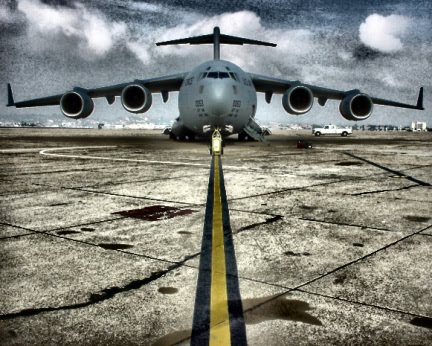
C 17 Globemaster 3

India wants to buy ten U.S. C-17 aircraft, to fill a need for strategic air transports. The main competition was the Russian Il-76, which mainly competed on price, at about $50 million each. The C-17, which costs at least three times as much, is also able to carry up to 86 tons. What the C-17 is best at is carrying about half that weight, half way around the world, non-stop. The C-17 is also easier to fly, and can also operate from short, primitive, air strips.

The C-17 is also easier to maintain, and more reliable. But a fuel-efficient Il-76, that can be refueled in the air, has a price that's tough to beat. The latest version, the Il-76MF, has a payload of 60 tons, and a cargo compartment that is 50 percent larger than earlier models. With a full load, the aircraft can fly 4,200 kilometers. Carrying 20 tons, it can go 8,500 kilometers.

The Indians have 41 Il-76s, and were apparently looking to step up. The C-17 has a good track record, several satisfied foreign customers, and is a follow on to the American contemporary of the Il-76, the C-141 (which is now retired.) The Indians are also getting tired of unreliable prices and maintenance policies typical of Russian equipment. As India buys more Western systems, they note that the total (lifecycle) cost of more expensive Western gear tends to be less, or nearly the same, as with comparable Russian models. Plus, the Western gear is more effective, which is very important for a weapons system.

Key Data


Permanently Installed Sidewall Seating 54 seats, 27 each side, width 18in, spacing 24in centre to centre Centerline Seats, Stored On-Board 48 seats, eight sets of six back-to-back
Palletised, Ten-Passenger Pallets 80 seats on eight pallets, plus 54 passengers on sidewall seats Litter (Medical Stretchers) Stations On-Board.
Three stations, three litters (stretchers) each Litter Stations, Additional Kit
Nine additional stations Total Capability, Contingency
36 litters, 54 ambulatory

Flight Crew Two

Full specifications


The Boeing C-17 Globemaster III military airlift aircraft is a high-wing, four-engine, T-tailed military transport vehicle capable of carrying payloads up to 169,000lb. It has an international range and the ability to land on small airfields. A fully integrated electronic cockpit and advanced cargo systems allow a crew of three; the pilot, co-pilot and loadmaster, to operate all systems on any type of mission.

Since it entered service in January 1995, 187 aircraft have been delivered to the US Air Force. In February 2009, a $2.95bn contract for the 15 additional C-17s will took the tally to 205 C-17s destined for the US Air Force by August 2010.

The UK Royal Air Force has six C-17s, which have, between them, flown more than 22 million nautical miles (25 million miles or 41 million kilometres) in their eight years of operations.
"The Boeing C-17 Globemaster III military airlift aircraft is capable of carrying payloads up to 169,000lb."

In August 2006, a fifth aircraft (delivered in April 2008) was ordered and the purchase of the first four aircraft in 2008 was confirmed. In December 2007, the UK purchased a sixth aircraft, aircraft which was delivered in June 2008.

In March 2006, Australia selected the C-17, with a requirement for four aircraft. The first aircraft was delivered in December 2006, the second in May 2007, the third in February 2008 and the final aircraft in March 2008.

In July 2006, Canada announced the selection of the C-17 with a requirement for four aircraft. The contract was signed in February 2007. Deliveries began in August 2007 and concluded in April 2008.


In September 2006, Nato announced its intention to buy an initial three or four C-17 aircraft. In June 2007, an international consortium, consisting of fifteen Nato countries plus two partner countries (Finland and Sweden), agreed to set up the strategic airlift capability (SAC) which will be based at Papa Air Base in Hungary.

A new Nato Airlift Management Organisation (NAMO) will purchase, own, and manage the aircraft. A multinational military unit, the heavy airlift wing (HAW), will conduct airlift operations. In May 2008, SAC requested the foreign military sale of the first two C-17 aircraft. Deliveries are planned to begin in spring 2009 and all three aircraft are to be delivered by the end of 2009. The SAC1 C-17's first flight is scheduled in June 2009,
In March 2007, Boeing announced that C-17 production would conclude in 2009, when current orders have been fulfilled. However the purchase of 15 additional aircraft for the USAF was approved in 2008.

In July 2008, Qatar placed an order for two C-17, to be delivered from mid-2009. The United Arab Emirates announced on 24 February 2009 that it will acquire four C-17s. There are currently 198 C-17s in service.

Flight-testing of the C-17 using a blend of synthetic fuel and JP-8 began in October 2007, as part of a USAF process to develop more-efficient fuel for its fleet, with less reliance on imported petrol. Certification for the aircraft powered by synthetic fuel was completed in February 2008.
Boeing has 687 suppliers in 43 states. Current orders will carry C-17 production till January 2011. Then it would need the support of the air force for any initial fielding of the advanced C-17 that is planned for 2015.

C-17 design


A propulsive lift system allows the C-17 to achieve safe landings on short runways. The C-17 is capable of landing a full payload in less than 3,000ft. The propulsive lift system uses engine exhaust to generate lift: the engine exhaust is directed onto large flaps, which extend into the exhaust stream, allowing the aircraft to fly a steep approach at a relatively low landing speed.
The aircraft is capable of turning in a small radius and can complete a 180° star turn in 80ft. The aircraft can also carry out routine backing. A fully loaded aircraft is capable of backing up a 2% gradient slope using the directed flow thrust reversers.


Cockpit

The C-17 cockpit accommodates pilot, co-pilot and two observer positions. The digital avionics system has four Honeywell multi-function cathode-ray tube displays, two full-capability HUDs head-up displays) plus cargo systems.

The quadruple-redundant electronic flight control system also has a mechanically-actuated backup system.There are two Lockheed Martin central processing computers, one Hamilton Sundstrand data management computer and two Honeywell air data computers.
A program to upgrade the C-17A avionics includes new mission computers and displays, new software for the warning and caution system, being provided by Northrop Grumman Navigation Systems. The automatic flight control system will be upgraded with BAE Systems Controls CsLEOS real-time operating system and will be certified for GATM (global air traffic management) system requirements.

Cargo systems

The design of the cargo compartment allows the C-17 to carry a wide range of vehicles, palleted cargo, paratroops, air-drop loads and aeromedical evacuees.The cargo compartment has a sufficiently large cross-section to transport large wheeled and tracked vehicles, tanks, helicopters (such as the AH-64 Apache), artillery, and weapons such as the Patriot missile system. Three Bradley armoured vehicles comprise one deployment load on the C-17. The US Army M1A1 main battle tank can be carried with other vehicles.


The maximum payload is 170,900lb (77,519kg) with 18 pallet positions, including four on the ramp. Airdrop capabilities include: single load of up to 60,000lb (27,216kg), sequential loads of up to 110,000lb (49,895kg), Container Delivery System (CDS) airdrop up to 40 containers, 2,350lb (1,066kg) each; up to 102 paratroops.

The aircraft is equipped for LAPES (low-altitude parachute extraction system) drops. For Medevac, the C-17 can transport up to 36 litter and 54 ambulatory patients and attendants. C-17s can take off from a 7,600ft airfield, fly 2,400nm and refuel while in flight. It can land in 3,500ft (1,064m) and 90ft-wide (27.4m) airstrip.

Countermeasures

The C-17 is equipped with BAE Systems Integrated Defense Solutions (formerly Tracor) AN/ALE-47 countermeasure flare dispensers and the ATK AN/AAR-47 missile warning system.
AN/AAR-47 has a suite of surface-mounted thermal sensors around the aircraft, which detect the thermal signature of the missile exhaust plume. Frequency selection and signal processing techniques are used to minimise the false alarm rate. The system provides a warning to the crew via the cockpit indicator unit of the presence and direction of the missile threat. A signal is automatically sent to the ALE-47 dispenser.

AN/ALE-47 is capable of carrying a mix of expendable countermeasures, including jammers. The system interfaces to the C-17 aircraft's sensors. The aircrew can select the mode of operation of the dispenser for fully automatic, semi-automatic or manual operation.
The cockpit control unit can be used to input mission data, together with the numbers and types of expendable countermeasures systems loaded into the ALE-47. The cockpit controller updates and displays the status of the dispenser and the numbers and types of countermeasures remaining.

The ALE-47 is capable of dispensing the new-generation active expendable decoys, POET and GEN-X, in addition to the conventional chaff and flare decoys that are compatible with the previous-generation ALE-40 and ALE-39 dispensers."The C-17 has an international range and the ability to land on small airfields."56 USAF C-17 aircraft are being equipped with the Northrop Grumman large aircraft infrared countermeasures (LAIRCM) system.LAIRCM is based on the AN/AAQ-24(V) NEMESIS. It entered low-rate initial production in August 2002 and completed initial operational test and evaluation in July 2004. 25 upgraded aircraft have been delivered. The system is scheduled to enter service in 2007. The four aircraft leased by the UK RAF are fitted with LAIRCM.

Turbofan engines

The four Pratt & Whitney PW2040 (military designation-F117-PW-100) turbofan engines with 40,440lb thrust each are integrated in the wings. Engine thrust reversers, which are operable in flight, and speedbrakes enable the aircraft to carry out rapid deceleration and descent manoeuvres.The cruise speed is between Mach 0.74 and 0.77. The range without in-flight refuelling, and with a payload of 160,000lb, is 2,400nm. Aerial refuelling provides an intercontinental non-stop range.

Sidharth K Menon.[Defence and Intelligence Analyst]

October 31, 2009

Pakistani F - 16's

Pakistani F -16 's

The US State Department decided to sell Pakistan 18 new F-16s with an option for 18 more. The US also offers to acquire and upgrade 26 used F-16A/B aircraft from U.S. inventories and to upgrade Pakistan's current fleet of 34 F-16s.

The Government of Pakistan has requested a possible sale of various munitions for the planes and logistic support like:

200 AIM-9M-8/9s Sidewinders
500 AIM-120C5s AMRAAM BVR missiles
800 general purpose 2,000 and 500-pound bombs
500 JDAM bomb guidance systems
Link 16
JHMCS
Sniper targetting pod
CFTs

Pakistan intends to buy 36 new F-16 fighter jets from the US and not 77 as originally planned. Pakistan delayed its purchase last year as the country focused on recovering from a devastating earthquake.If Pakistan takes all 36 new Block 50/52 C/Ds F-16s being offered, the deal would extend F-16 production in Fort Worth until June 2011.

The precise terms of the F-16 sale to Pakistan haven't been negotiated between Lockheed and Islamabad. The company currently is producing F-16s for Poland and Chile and has a backlog of 144 planes on order.Lockheed's goal is to keep the line open until at least 2012, when the company is to begin major production of its new F-35 Joint Strike Fighter, said spokesman Joseph Stout."The big order we're pursuing is in India, where they have a stated requirement for 126 aircraft," Stout said.US State Department spokesperson Julie Reside described the sale as "part of an effort to broaden our strategic partnership with Pakistan and advance our national security and foreign policy interests in South Asia"."Pakistan is a long-term partner and major non-NATO ally," she noted.Reside stressed that the sale is nothing to do with the nuclear partnership that the US is building with India. She also dismissed any suggestion that the sale could contribute to an arms race in South Asia and said a dialogue between India and Pakistan has already helped reduce tensions and provided greater stability in their region.

In December 2005, the US provided two upgraded F-16s to Pakistan for free as a "goodwill gesture".

PAF F-16A block 15

Pakistan has ordered a total of 111 F-16A/B aircraft. Of these, 71 were embargoed by the US due to Pakistan's nuclear weapons program. Of these 71, 28 were actually built but were flown directly to the AMARC at Davis-Monthan AFB for storage.
Over the years, various plans were conceived for these 28 aircraft: Pakistan wanted to get the aircraft or their money back; they were offered to various nations, none of which were interested; ultimately, the US Navy and USAF entered them into service as aggressor aircraft.
After Pakistan's help in the war on terror, the US lifted the embargo. In 2005, Pakistan requested 24 new Block 50/52 F-16C/Ds (with option for as much as 55 aircraft). Ultimately an order for 18 F-16s was placed with an option on another 18.

Peace Gate I

Pakistani F-16A
In December 1981, the government of Pakistan signed a letter of agreement for the purchase of up to 40 F-16A/B (28 F-16A and 12 F-16B) fighters for the Pakistan Fiza'ya (Pakistan Air Force, or PAF). The deal would be split into two batches, one of 6 aircraft and the other of 34. The first aircraft were accepted at Fort Worth in October of 1982, and the first F-16, flown by Squadron Leader Shahid Javed, landed in Pakistan at Sargodha Air Base on January 15th, 1983 as part of a package of 6 'Peace Gate I' aircraft (2 A's and 4 B's).

Peace Gate II

The remaining 34 aircraft were delivered under Peace Gate II. The Pakistani F-16A/B's are all Block 15 aircraft, the final version of the F-16A/B production run, and are powered by the Pratt & Whitney F100-PW-200 turbofan. All 40 'Peace Gate I & II' aircraft were delivered between 1983 and 1987. By 1997, 8 aircraft of the initial Peace Gate I & II order have been written off in various mishaps, hence 32 remain in service and despite the embargo, caused by the Pakistan-specific Pressler Amendment (see below), are being fully supported by commercial contracts.

The F-16s were assigned USAF serial numbers for record-keeping purposes, and carry a three-digit PAF serial number on their noses; the F-16A's being assigned numbers in sequence beginning with 701, and the F-16B's being assigned numbers beginning with 601. The two digit prefix preceding these numbers is the year of delivery of these aircraft. The PAF Falcons have a slightly altered color scheme, with the dark gray area covering most of the wings and the aft part of the horizontal tailplanes and carry toned-down markings: the national flag (normally a white moon and star on green field) on the tail and roundels on the upper wing surface.

Peace Gate III

Seven years after the first order, in December of 1988, Pakistan ordered 11 additional F-16A/B Block 15 OCU (Operational Capability Upgrade) aircraft (6 Alpha and 5 Bravo models) under the Peace Gate III program. These aircraft were purchased as attrition replacements and fully paid for, but are still awaiting delivery in the Arizona Desert. The reason for this is that Pakistan got involved in a controversy with the United States over its suspected nuclear weapons capability. Intelligence information reaching US authorities indicated that Pakistan was actively working on a nuclear bomb, had received a design for a bomb from China, had tested a nuclear trigger and was actively producing weapons-grade uranium. Furthermore, the F-16A's of no 9 and 11 squadrons at Sargodha AB have allegedly been modified to carry and deliver a Pakistani nuclear weapon. In addition, Pakistan has steadfastly refused to sign the Nuclear Non-Proliferation Treaty.

As a result, in accordance to the Pressler amendment to the Foreign Assistance Act, which forbids military aid to any nation possessing a nuclear explosive device, the United States government announced on October 6th, 1990 that it had embargoed further arms deliveries to Pakistan. The 11 Peace Gate III aircraft were consequently stored at AMARC (Aircraft Maintenance and Regeneration Center) at Davis-Monthan AFB, Arizona, also known as the Boneyard. There, they were put in 'Flyable Hold' for 5 years, during which time 85% of each aircraft's fuel system was preserved with JP-9, and each aircraft had its engine run once every 45 days. This resulted in the curious situation that most of those aircraft now have more engine run time than air time, the latter being only 6 hours. This low air-time figure, plus the fact that these aircraft are the most modern F-16A/B's built, is the main reason why countries interested in second-hand F-16s first look at the Pakistani airframes.

Peace Gate IV

In September of 1989, plans were announced by Pakistan to acquire 60 more F-16A/B's. A contract was signed in the same year under the Peace Gate IV Foreign Military Sales Programs, for the delivery of 60 F-16s for US $1.4 billion or approximately US $23 million a piece. By March of 1994, 11 of these planes had been built and were directly flown into the Sonoran desert where they joined the 11 Peace Gate III aircraft in storage. A further six aircraft were stored by the end of 1994, so that a total of 17 aircraft (7 F-16A's and 10 F-16B's) of the Peace Gate IV order are now stored. A stop-work order affected the remaining 43 planes of the Peace Gate IV contract.

The Brown amendment later eased the restrictions on weapon exports to Pakistan, but specifically excluded the F-16s from this release. Pakistan had already paid $685 million on the contract for the first 28 F-16s (11 Peace Gate III and 17 Peace Gate IV), and insisted on either having the planes it ordered delivered or getting its money back.

The saga of the embargoed F-16s

In March 1996, nine aircraft out of those which had already been manufactured for Pakistan, were sold to Indonesia. However, Indonesia cancelled this order on June 2nd, 1997. This 'unexpected' trouble with the Indonesian F-16 deal means a bigger problem to the Clinton administration both with respect to Pakistan and Indonesia. President Clinton had pledged to the Pakistan Prime Minister, Ms. Benazir Bhutto, that the money paid for the F-16s by Islamabad would be reimbursed if the equipment could not be delivered. In trying to come to terms with Islamabad's demand that Washington would return the money, the Clinton administration went on to see if the planes could be sold to a third country and the proceeds transferred. Interested buyers included amongst others the Republic of China.

At the end of 1997, with chances of finding a buyer close to zero, it was decided to take the PAF F-16s out of flyable hold and into the Boneyard. The airframes were offered to the Philippine Air Force, in view of its modernization plans. However, lack of funds precluded this deal as well.

In May 1998, a rumor suggested that the 28 Pakistani AF F-16A/B aircraft stored at the AMARC could possibly be donated to the Air Force of the Federation of Bosnia and Herzegovina, as a part of the US led 'Train & Equip' program. As Pakistan is already taking part in this program (training Bosnian Army Anti-tank missile teams), this is a solution that could satisfy both sides in this long dispute. Again, this proved to be not viable.

After the detonation of five nuclear devices by India in May 1998, in a remote area close to its border with Pakistan, Washington feared that this might escalate the old border dispute between Pakistan and India to a full crisis. In order to keep Pakistan from responding to this challenge, US president Bill Clinton suggested that the 28 stored F-16s would be delivered after all, in batches of 1 or 2. However, the internal pressure on the government proved to strong and shortly after India's demonstration, Pakistan responded by detonating an unknown number of nuclear devices.

Finally, on December 1st, 1998, the New Zealand Government announced that it would lease-buy the 28 Pakistani F-16s stored at the AMARC. Three days later, the United States said they hoped for an 'early and fair' agreement on how to compensate Islamabad for its aborted purchase of US F-16 fighters. President Clinton briefed Pakistani Prime Minister Nawaz Sharif on US efforts to compensate Pakistan for the $658 million it paid for the 28 F-16s. US officials said the United States has already paid $157 million of this back to Islamabad, raising the money by selling aircraft components to other countries. New Zealand agreed to pay some $105 million over 10 years to lease the fighters, providing additional funds that could be used to give Pakistan some of its money back.

At the end of 1998, the United States announced it would pay Pakistan $326.9 million in cash and up to $140 million in other compensation to settle the eight-year dispute. The $140 million will include about $60 million in US white wheat that Pakistan will receive during the current US fiscal year, which began on October 1st. The remaining $80 million in compensation will be negotiated by the two sides. The F-16 issue has been a headache for Pakistan, which is grappling to repay millions of dollars on its $32 billion in foreign debt amid a hard currency drought caused by sanctions and the suspension of International Monetary Fund programs.
In 1999 a new New Zealand government was elected who started a major reorganisation of the armed forces. One major element in this was the cancellation of the F-16 contract and the disbandment of its fighter force. The planes stayed in the boneyard for just a little longer.

In 2002, the US finally stopped trying to sell the aircraft and decided to assign them to the USAF and US Navy to fill the Aggressor role. After the demise of the (T)F-16N aggressor force, the US Navy lacked a high-performance aggressor aircraft. Because of the low airframe life of the embargoed Pakistani F-16s, these airframes were ideally suited for the demanding aggressor role. The 28 aircraft were thus evenly split between the USAF and the US Navy, and will take a vital role in DACT training of US forces.

After the attacks on 9/11 the Pakistani government became a major US ally in the war on terror. It was decided to redeliver those aircraft to Pakistan. Untill now, only half of them has been redelivered, with the remainder still to follow.

Peace Drive

On March 25th, 2005, the US Government announced that it had agreed to Pakistan's request to sell new F-16s. Initially, Pakistan has requested an additional 24 new Block 50/52 F-16C/Ds (with option for as much as 55 aircraft). Not much details are known at this moment about a possible sale of the aircraft to Pakistan. The deal is expected to be concluded by September or October of 2005. As part of the package, it was also agreed that the current fleet of older A/B models would get the MLU update.

As a sign of good gesture, the US agreed to supply Pakistan with a number of F-16s who where build under the Peace Gate III/IV programs.

Finally, after long series of negotiations, on September 30th, 2006 the contract was signed between the Pakistani and US government for the acquisition of 18 new F-16C/D block 52 aircraft and an option for another 18 more. In the deal the re-delivery of the 26 remaining Peace Gate III/IV aircraft was also agreed and the upgrade of those aircraft - and the remaining F-16A/B fleet - to MLU standards.

This order was granted and given a new FMS name at Pakistan's request. Albeit it already had the Peace Gate program, the PAF decided to choose another name since Peace Gate had too much negative commotion since the embargo of the last batch of aircraft.

The Pakistan Air Force currently has the Block 15 F-16A/B model in operation, which has an upgraded APG-66 radar that brings it close to the MLU (Mid-life Update) radar technology. The main advantage is the ability to use the AIM-7 Sparrow and AIM-120 AMRAAM missiles if they were ever to be released to the PAF. Furthermore, the radar is capable of sorting out tight formations of aircraft and has a 15%-20% range increase over previous models. All the earlier F-16s were brought up to OCU standards and have received the Falcon UP structural modification package.

Armament

Pakistani F-16A with Thompson Atlis II laser designator pod on the 5L chin station, and two Paveway LGBs
Currently, Pakistani F-16s typically carry two all-aspect AIM-9L Sidewinders on the wing tip rails along with a pair of AIM-9P-4's on the outermost underwing racks, while the Matra Magic 2 (French counterpart of the Sidewinder) can be carried as well. They also have an important strike role, being capable to deliver Paveway laser-guided bombs. Pakistani F-16s are also capable of firing the French AS-30 laser guided missile.The ALQ-131 pod is carried as ECM protection.

Atlis laser designation pod. Pakistan has acquired the French-built Thompson-CSF ATLIS laser designation pod for use on its F-16s. The ATLIS pod was first fitted to Pakistani F-16s in January 1986, thus making the F-16 the first non-European aircraft to be qualified for this pod.

Operational Service

Combat

Pakistan was the second nation (after Israel) to use the F-16 in combat. The Soviet invasion of Afghanistan in 1979 in support of the pro-Soviet government in Kabul, which was being hard-pressed by Mujahadeen rebel forces, marked the start of a decade-long occupation. Mujahadeen rebels continued to harass the occupying Soviet military force as well as the forces of the Afghan regime that it was supporting. The war soon spilled over into neighboring Pakistan, with a horde of refugees fleeing to camps across the border in an attempt to escape the conflict. In addition, many of the rebels used Pakistan as a sanctuary from which to carry out forays into Afghanistan, and a steady flow of US-supplied arms were carried into Afghanistan from staging areas in Pakistan near the border. This inevitably resulted in border violations by Soviet and Afghan aircraft attempting to interdict these operations.

Between May 1986 and November of 1988, PAF F-16s have shot down at least eight intruders from Afghanistan. The first three of these (one Su-22, one probable Su-22, and one An-26) were shot down by two pilots from No. 9 Squadron. Pilots of No. 14 Squadron destroyed the remaining five intruders (two Su-22s, two MiG-23s, and one Su-25). Most of these kills were by the AIM-9 Sidewinder, but at least one (a Su-22) was destroyed by cannon fire. Flight Lieutenant Khalid Mamood is credited with three of these kills. At least one F-16 was lost in these battles, this one in an encounter between two F-16s and six Afghan Air Force aircraft on April 29th, 1987. However, the lost F-16 appears to have been an 'own goal', having been hit by a Sidewinder fired by the other F-16. The unfortunate F-16 pilot (Flight Lieutenant Shahid Sikandar Khan) ejected safely.


Sidharth K Menon
Defence and Intelligence Analyst.

July 20, 2009

HUNGRY PREDATORS

PREDATOR IN SERVICE / MQ-1 ARMED PREDATOR / US ARMY SKY WARRIOR

The Predator was introduced to operations in the summer of 1995. Three Predators were deployed over Bosnia that summer, flying out of Albania, with one command-destroyed after an engine failure and another apparently shot down. These aircraft were replaced. Initially, these Predators only had the Skyball turret payload, but they were withdrawn to the US for fitting the SAR payload, and then returned in the spring of 1996. The Predator was passed over to Air Force control after its Bosnian service. The Air Force promptly put the Predator into service in the air campaign against Yugoslavia in 1999.

The Air Force handed the Predator over to the service's Big Safari office after the Kosovo campaign in order to accelerate tests of the UAV in a strike role, fitted with reinforced wings and stores pylons to carry munitions, as well as a laser target designator to designate weapons for itself and other strike platforms. The Predator's service in the Kosovo campaign left something to be desired, since it was unarmed and operators of the UAV were not properly trained or equipped to direct strike aircraft pilots onto a target. The result was a comedy of errors, with one officer involved saying that with such clumsy methods it would 45 minutes to get a strike aircraft into the same zip code. The laser target designator allowed targets to be pinpointed for strike aircraft quickly and accurately, with the Predator firing its own munitions when a target was likely to be gone before a strike aircraft arrived.

This effort led to a series of tests in February 2001, in which the Predator fired three Hellfire anti-armor missiles, scoring hits on a stationary tank with all three missiles. The effectiveness of the scheme was a relief, because nobody was quite sure if firing a Hellfire from a Predator might not rip the UAV's wing right off. The configuration was put into service, with the armed Predators given the new designation of "MQ-1A". Given that a Predator is very unobtrusive and the Hellfire is supersonic, such a combination gives little warning of attack.

A new "Hellfire P" variant of the missile has been fielded, featuring an "off boresight" seeker that can be gimballed to get a target lock, eliminating the need to point the Predator at a target. This permits faster targeting and a wider missile launch envelope. The Air Force is working on carriage of the Viper glide weapon. The service has also investigated using the Predator to drop battlefield ground sensors, and (as discussed later) to carry and deploy the "Finder" mini-UAV. Over the long run, the USAF wants to use a 113 kilogram (250 pound) GPS-guided "small diameter bomb (SDB)".

The Air Force has long been cautious about arming UAVs, since armed long-range UAVs are technically outlawed by the 1988 Intermediate Nuclear Forces (INF) treaty which prohibits ground-launched cruise missiles. Interestingly, the INF does not ban arming ship or submarine launched UAVs, nor short-range tactical UAVs. Since the USAF is now very enthusiastic about the armed Predator, since it is proving an excellent weapon in America's current "war on terror", the legal implications will likely become a matter of diplomatic discussion.

* The Hellfire experiments were quickly put to use. After attacks on America on 11 September 2001 by terrorists believed to be associated with Saudi dissident Osama bin Laden and his Afghanistan-based al-Qaeda terrorist network, in early October of that year the US military began a campaign against Afghanistan intended to root out Osama and the al-Qaeda.

The Predator was a particularly important element in the campaign, being used by the USAF to locate high-priority targets for air strikes. The Predators were armed with Hellfires to ensure that if Osama or other al-Qaeda leadership were spotted, they could be attacked immediately. On 18 November 2001, a Predator was supporting an attack on a Taliban site when the UAV's operators spotting enemy forces fleeing the site. A Hellfire was launched, killing dozens, including some Taliban leadership.
By the time of the Afghan campaign, the Air Force had acquired 60 Predators, and lost 20 of them in action. Few if any of the losses were from enemy action. The Predator was not a very mature machine, with one significant problem being that communications from friendly forces can break the command datalink, which resulted in the loss of at least one Predator. The fact that it has a limited operational ceiling means that it can't fly above storm conditions, and foul weather, particularly icy conditions, caused the lion's share of the losses.

In response to the losses caused by cold weather flight conditions, a few of the later Predators obtained by the USAF were fitted with de-icing systems, along with an uprated turbocharged engine and improved avionics. This improved "Block 1" version is referred to as the "RQ-1L", or the "MQ-1L" if it can carry munitions.

On 3 November 2002, an MQ-1L operating over Yemen spotted a car that was identified as carrying a high al-Qaeda official and five of his people. The Predator blasted the car with a Hellfire, killing all the occupants. The UAV was operated by the CIA, but was being flown by a USAF pilot from a French military base in Djibouti, in the horn of Africa. The attack was cued by observers on the ground.
Of course, Predators were employed in the American invasion of Iraq in the spring of 2003. One fired a Hellfire at an antenna on the roof of the Iraqi propaganda ministry in Baghdad to get the propaganda minister, Mohammed Saeed al-Sahaf, off the air. The propaganda minister had acquired an international reputation for his colorful remarks, and was known as "Baghdad Bob" to American forces, but the decision was taken to finally shut him up. The Predator-Hellfire was used because the propaganda ministry was close to the grand mosque and nobody wanted to risk damaging it by using a larger munition.

Interestingly, some of the older Predators and Gnat-750s, as well as old Pioneer and Hunter UAVs, were stripped down to be used as decoys to provoke Iraqi defenses. After the occupation of Iraq, CIA-operated Predators and I-Gnats were launched from both Afghanistan and Iraq to probe Iran for evidence of a nuclear program, with one apparently lost in a crash in Iran in the summer of 2005.

Osama bin Laden is believed to be hiding out in the mountains of Pakistan and Predators are also on patrol there, waiting for him to show himself. He is distinctive, being very tall and slender, making him a good target. In 2008, Predator attacks on Islamic militants became so commonplace that the Pakistani government protested loudly over the incidents. There was suspicion the Bush II Administration was attempting to pressure the Pakistanis into taking more decisive action against the militants.

Incidentally, USAF Predators in the Middle East are actually "piloted" from Nellis AFB and Creech AFB in Nevada. Only a relatively small service and handling team deals with the machines "in theater". One pilot flying the Predator from Nellis who had been on the battle lines says the experience is much the same: "Physically, we may be in Vegas [Nellis AFB is next door to Las Vegas], but mentally we're flying over Iraq. It feels real."

The Air Force had been hard-pressed to train personnel to fly the Predators, and the pilots have been badly overloaded, making retention troublesome. A "multiple aircraft" control system is being introduced, allowing one pilot to control up to four Predators, with three machines operating on autopiloted search patterns while one is under direct control. The USAF regards getting up the operational learning curve as a high priority, since the number of Air Force Predator squadrons is expected to expand rapidly.
One of the limitations of the Predator's EO system is that it has a narrow field of view. It works well enough to inspect a particular target, but it leaves much to be desired in keeping an eye on the "big picture". Two Predators have been flown in Iraq with a set of commercial off-the-shelf cameras mounted over the airframe to give a wide-area picture, the images from the different cameras being stitched together by software. They can only provide a frame or two per second and have no night / foul weather capability, but they have proven the concept and the Pentagon is interested in developing a more capable system.

* With the Predator proving so useful, in the summer of 2005 the US Army, having initiated an "Extended Range Multi-Purpose (ERMP)" UAV requirement a year earlier, formally decided to jump on board the bandwagon by awarding a contract to General Atomics for the "MQ-1C Sky Warrior", sometimes known just as the "Warrior", a Predator with a heavy fuel (diesel / jet fuel) engine, a slightly increased wingspan, and increased system redundancy. The Army had already operated I-Gnats in small numbers from 2003.

The Sky Warrior carries surveillance, communications relay, and strike payloads. The heavy-fuel engine is said to provide more horsepower, better fuel efficiency, and greater reliability than the Rotax 912 gasoline engine, though apparently the major driving force for adopting the new engine was the fact that Army vehicles are diesels, and having to support a gasoline engine in the field would have been logistically troublesome. The Sky Warrior features a Tactical Common DataLink (TCDL) along with its satellite comlink, and can carry a warload of four Hellfire missiles, twice that of the original Predator. Operational endurance is up to 30 hours. First flight was in the spring of 2008, with the initial "Block 0" Sky Warrior in service in Iraq a month later for combat evaluation.

The Army is definitely serious about the Sky Warrior, planning to obtain 11 systems, with 12 UAVs and 5 control stations per system. Combat in Iraq has obviously been a major driving force in the program, with ground forces in the theater relying on fighter jets with long-range targeting pods to provide real-time observation in support of ground combat operations. The Sky Warrior would be able to provide that capability with much more persistence and at much lower cost.
Although the relationship between the Air Force and the Army over the close-support mission has been generally, if not always, good, Army brass also like to have their own air support assets. Something of a "turf battle" has emerged between the Army and the Air Force over the Predator, with the Air Force attempting to take over control of relatively capable UAV assets such as the Sky Warrior from the Army. To no surprise, the Army has strongly resisted the idea.

* After a somewhat lengthy adolescence, the Predator has matured into a very useful system that has received a good deal of public attention. Unsurprisingly, General Atomics has developed an improved "Predator B" series.

General Atomics began development of the Predator B with the "Predator B-001", a proof-of concept aircraft, which performed its initial flight on 2 February 2001. The B-001 was powered by a Honeywell / Allied-Signal TPE-331-10T turboprop engine providing 712 kW (950 SHP). The Predator B-001 had a standard Predator airframe, except that the wings were stretched from 14.6 meters (48 feet) to 19.5 meters (64 feet). The B-001 had a speed of 390 KPH (240 MPH), compared to 220 KPH (135 MPH) for the Predator A, and could carry a payload of 340 kilograms (750 pounds) to an altitude of 15.2 kilometers (50,000 feet) with an endurance of 25 hours.

Although General Atomics originally considered a Predator B variant powered by a Williams FJ-44-2A turbofan engine providing 10.2 kN (1,040 kgp / 2,300 lbf) thrust, there was more interest in the turboprop configuration at the time, and the production Predator B machines retain the TP-331-10T engine. The production machines have a maximum ceiling of 15.8 kilometers (52,000 feet), and an endurance of 36 hours. The higher ceiling allows the Predator B to fly above bad weather conditions. The turboprop engine was not only more powerful than the Rotax piston engine, it also had a much longer mean time between failures. The ground system remained much the same as that of the original RQ-1 / MQ-1 Predator.

General Atomics had originally funded Predator B development with company money in anticipation of government interest and contracts, and they weren't disappointed. In October 2001, the US Air Force signed a contract with the company to purchase an initial pair of Predator Bs for evaluation, with follow-up orders for production machines; the USAF designated the type the "MQ-9B Hunter-Killer" or "Reaper". Cost is on the order of about $5 million USD each, more than a Predator A, but still a fraction of the cost of a piloted combat aircraft. Reapers were quickly fielded, performing combat evaluations in Afghanistan in late 2007, with flight control performed from the USA over satellite comlinks.

The MQ-9B is fitted with six stores pylons, with a maximum external load of 1,360 kilograms (3,000 pounds). The inner stores pylons can carry a maximum of 680 kilograms (1,500 pounds) each, and are "wet" to allow carriage of external fuel tanks. The midwing stores pylons can carry a maximum of 270 kilograms (600 pounds) each, while the outer stores pylons can carry a maximum of 90 kilograms (200 pounds) each. An MQ-9B with two 450 kilogram (1,000 pound) external fuel tanks and 450 kilograms of munitions has an endurance of 42 hours. An improved targeting system, with greater range and resolution, has also been fitted.

The Reaper gives the service an enhanced "deadly persistence" capability, with the UAV hanging over a combat area night and day, waiting for a target to present itself. In this role, an armed UAV neatly complements piloted strike aircraft. A piloted strike aircraft can be used to dump larger quantities of ordnance on a known target, while a cheaper UAV can be kept in operation almost continuously, with ground controllers trading off in shifts, carrying a light warload to engage targets of opportunity.
The current Hellfire may not be the preferred munition, since it isn't qualified for operation at cold temperatures found at high altitudes, nor does it have the range to hit targets from such altitudes. An improved Hellfire would be one armament option, as are the SDB and Viper, or even the 225 kilogram (500 pound) version of the Joint Direct Attack Munition (JDAM) GPS-guided bomb for larger targets.

The Stinger AAM has also been evaluated as a store, but it does not appear that this configuration has been fielded since there has been no operational need for it to this time. There has been some thought of carriage of the bigger Sidewinder, or even the long-range AIM-120 AMRAAM, as stores. The AMRAAM would require that the Reaper carry an improved radar with AMRAAM targeting and control capabilities. General Atomics has published ads showing the Reaper armed with twin 225 kilogram guided bombs, eight Hellfires, and two Sidewinders, demonstrating just how much of a punch the machine can pack.
The Reaper complements and doesn't replace the smaller, cheaper, Predator A; the Reaper is primarily a loitering strike asset, while the Predator A is primarily a surveillance and reconnaissance asset. The plan is for squadrons to operate one Reaper for about three Predator As, with a total force of at least 250 UAVs spread over 15 squadrons. Britain has also obtained three Reapers, for an urgent operational requirement in Afghanistan, and would like to acquire more, with some intent to use them for surveillance. The Royal Air Force would like to use the Reaper to provide security at the 2012 Olympic Games in London. Italy has ordered a small batch of Predator Bs to follow up the purchase of the original Predator.

In addition, the US Forest Service (USFS) has evaluated a Reaper in a collaborative program with NASA and the US Federal Aviation Administration (FAA). The USFS and NASA conducted some trials in 2006 with a leased Predator B, leading to operations in 2007 with a Reaper obtained from the USAF. This machine was renamed "Ikhana", from the Chocktaw word for "intelligent" or "aware"; the name "Reaper" seemed a bit too warlike for a civil application. The Ikhana carried a NASA-designed infrared sensor package for fire mapping: although a standard Reaper can carry an infrared imager as a normal payload, it's too sensitive to be used to observe big, hot fires. The sensor package relayed imagery back to a ground station in real-time to allow warnings to be sent to fire-fighters.

NASA not surprisingly is also considering a range of other missions for the Ikhana. The US National Oceanographic & Atmospheric Administration (NOAA) is planning collaborative UAV efforts with NASA for weather and climate research. The two agencies have long collaborated on weather satellites and UAVs would only be an extension of existing practice.

General Atomics has designed a navalized version of the Reaper, named the "Mariner", for carrier operations and has flown a demonstrator. The production Mariner would be turboprop-powered, with folding wings for carrier storage; shorter and more rugged landing gear; an arresting hook; cut-down or eliminated ventral flight surfaces; and six stores pylons with a total load of 1,360 kilograms (3,000 pounds).

Although General Atomics did backtrack on development of a turbofan-powered Predator B variant, the idea didn't die out. The company has acknowledged work on a "Predator C" with turbofan propulsion and improved stealth, but has not released details. Initial flight is expected in 2009.
Sidharth K Menon